Alcohol Marker Tip Guide: Brush vs Chisel vs Bullet (Durability & Line Control)

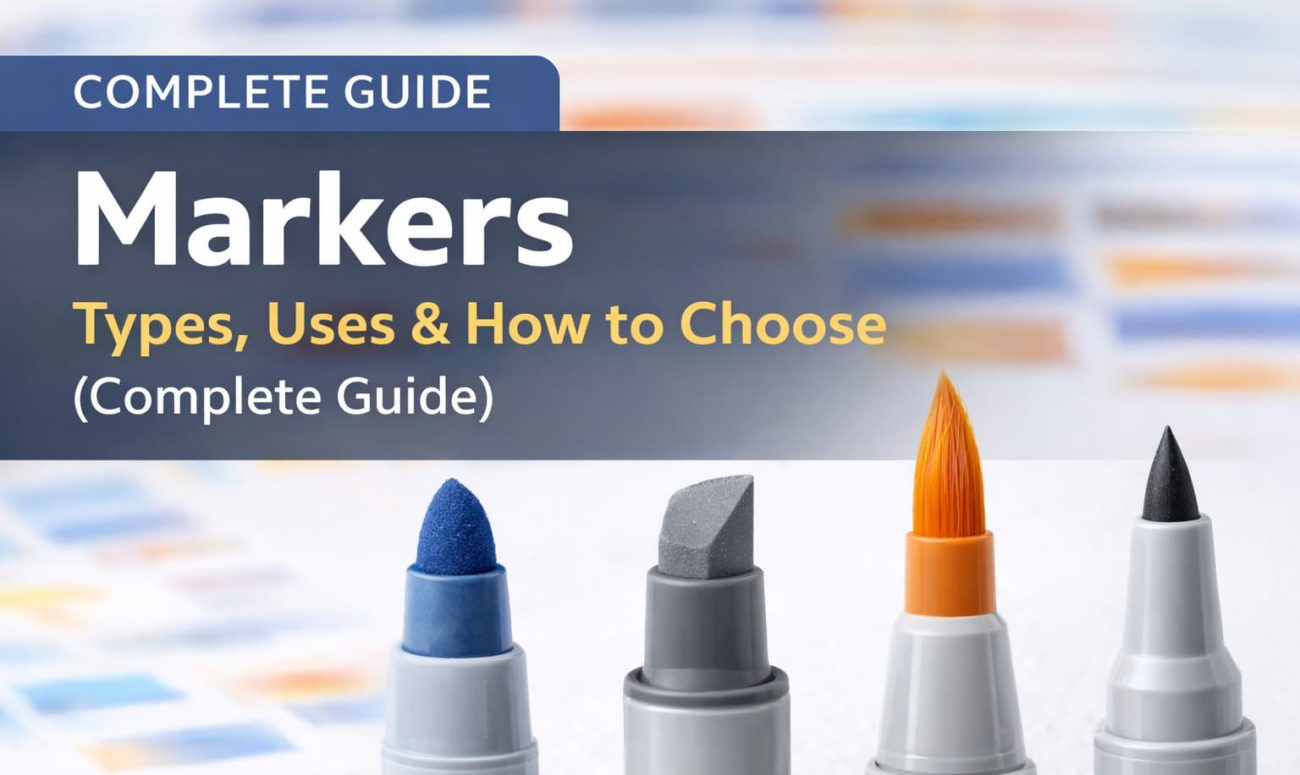
Alcohol marker tip guide cover showing brush, chisel, and bullet tips with ink swatches for durability and line control comparison

Choosing the right alcohol marker tip isn’t just a drawing preference—it affects line control, fill speed, durability, and how often users run into problems like fraying or dull edges.
If you’re sourcing alcohol markers for wholesale, private label, or OEM sets, tip choice also impacts consistency across production: the same feel, the same line width, and the same wear performance.

This guide compares brush vs chisel vs bullet in clear, practical terms—what each tip does best, how it wears over time, and which tip (or dual-tip pairing) fits your use case.

Alcohol marker tip guide cover showing brush, chisel, and bullet tips with ink swatches for durability and line control comparison

Quick Answer (Tip Choice in One Minute)

  • Bullet tip is the most stable for clean lines and edge control, and usually the most durable for everyday use.

  • Chisel tip is the fastest for large-area fills and the most common “workhorse” tip in sets.

  • Brush tip gives the best stroke variation and blending feel, but it’s also the most sensitive to paper texture, pressure, and nib material (and the most likely to trigger “fraying” complaints if not spec-locked).

Most alcohol markers in the market are dual-tip, because it’s the simplest way to balance fast fills + detail control in one marker.

Brush vs Chisel vs Bullet: Comparison Table

Tip type

Best at

Watch-outs

Durability 

Best for

Bullet

Clean outlines, predictable lines

Rounding → line gets thicker

High

Detail, writing, education

Chisel

Fast fills, broad coverage

Edge dulling/chipping → less crisp

High

Sets, general coloring

Brush

Stroke variation, blending feel

Fraying/splitting on rough paper

Medium*

Illustration, journaling

*Durability depends heavily on nib material + paper texture.

Bullet Tip (Fine/Bullet) — Most Stable for Clean Lines

If you want the steadiest lines and clean edges, bullet is the safest choice.

  • Line control: consistent across angles, easy to outline and clean up edges

  • Fill speed: slower for large areas

  • Durability: wears gradually (tip rounds off → lines get slightly thicker)

Best for: outlines, small gaps, tight corners, education/general sets, and the “control side” in dual-tip markers.
Buyer note: confirm tip size range and do a simple wear check (same paper + stroke length) to keep line width consistent across batches.

Chisel Tip — Fast Fills + Most Set-Friendly Workhorse

If you want fast coverage for sets, chisel is the most practical “workhorse” tip.

  • Fill speed: fastest for large-area coloring

  • Edge control: clean when the “knife edge” is used correctly

  • Durability: edge can round off (crisp edges get softer), rough paper may cause micro-chipping

Best for: broad fills, general-purpose sets, retail restocks, distributor programs.
Buyer note: align on chisel width + edge geometry, then check edge rounding after a defined fill test—this is what usually changes the “feel” between lots.

Brush Tip — Best for Blends, Most Sensitive to Wear

If blending and stroke feel matter most, brush is the upgrade—but it needs better durability control.

  • Blending & feel: best stroke variation and gradients

  • Line control: flexible tip = more sensitive to pressure and paper

  • Durability risk: fraying/splitting happens faster with heavy pressure, rough paper, or “dry writing” (often tied to cap sealing/ink supply)

Best for: blending, gradients, illustration/journaling, premium positioning.
Buyer note: ask the supplier to confirm nib material type (fiber/nylon category) and provide a basic fray-resistance result under a defined paper + pressure range.

What Affects Tip Durability and Line Control (What Buyers Often Miss)

Tip performance is not only “tip type.” These factors change line control and lifespan dramatically:

  1. Paper texture and coating
    Rough paper eats tips faster—especially brush tips. Smooth coated papers reduce friction and prolong nib life.

  2. Pressure and angle
    Hard pressure increases wear and damage. Chisel and brush tips are more sensitive to angle changes than bullet tips.

  3. Dry writing and ink lubrication
    When ink supply is low or inconsistent, the nib drags more. More drag = faster wear and more fraying risk.

  4. Cap seal quality
    A weak cap seal can dry the nib surface, making it feel scratchy and shortening life. Tip complaints sometimes start as a cap sealing problem, not just a nib problem.

Dual-Tip Is the Common Format: How to Choose Pairings

Most alcohol markers are made as dual-tip, so users can fill large areas fast and still keep control for details. Choosing the right dual-tip pairing is often the best way to balance speed and precision.

In most alcohol marker sets, “fine tip” usually refers to a small round bullet tip.

The most common dual-tip combinations

  • Chisel + Bullet (Fine) — the most common, stable combo for sets
    Best for bulk programs that prioritize low complaint rate and easy usability.

  • Chisel + Brush — fast fills + smoother blends
    Great for sketching audiences, but needs tighter nib spec and durability testing.

  • Brush + Bullet (Fine) — detail + blending oriented (less common)
    Better for premium positioning where users value feel over speed.

Choosing pairings by buyer program

  • Retail restock / distributors: Chisel + Bullet (Fine) for consistency and fewer returns

  • Art & journaling positioning: Chisel + Brush (or Brush + Bullet for premium sets)

  • Education / general market: Bullet-led control + chisel fill efficiency

FAQ

Which tip is best for blending with alcohol markers?

For blending, brush tips usually feel the smoothest because they allow softer pressure transitions and broader strokes. If you want blending but also stable edges, a dual-tip setup like chisel + brush is often the most practical.

Which alcohol marker tip lasts the longest?

In typical everyday use, bullet tips tend to last the longest because they wear gradually (rounding) rather than splitting. Chisel tips are also durable, but edge rounding can change the feel more noticeably over time.

Can I combine tips in one marker (dual tip)?

Yes—most alcohol marker sets are dual-tip for exactly this reason. Common pairings include chisel + bullet (fine) for stable sets and chisel + brush for sketching-focused programs.

How do I prevent brush tip fraying?

Brush tip fraying is usually reduced by:

  • selecting a more wear-resistant nib material type (fiber/nylon category)

  • defining a realistic pressure range and testing it

  • using smoother paper in user guidance

  • ensuring strong cap sealing to prevent tip drying and scratchiness
    For bulk programs, the best protection is to spec-lock the nib material category and a fray-resistance test method.

What tip specs should I lock for OEM alcohol marker orders?

At minimum, lock:

  • tip combo (single/dual; chisel + bullet(fine), chisel + brush, etc.)

  • tip size range and line width positioning

  • durability test method (paper type + stroke count + pressure range)

  • acceptance criteria for wear (fray threshold, edge rounding threshold)
    If you share your target market, set size, and positioning, a factory can recommend the most stable tip configuration and QC checks for repeat orders.

Build Your Alcohol Marker Set

Tell us your tip combo (Chisel + Bullet/Fine or Chisel + Brush), set size, and target market.
We’ll recommend a durable nib setup, confirm packaging options, and send an OEM quote with sampling steps.


    Customization requirement:


    Will be used in accordance with our Privacy Policy