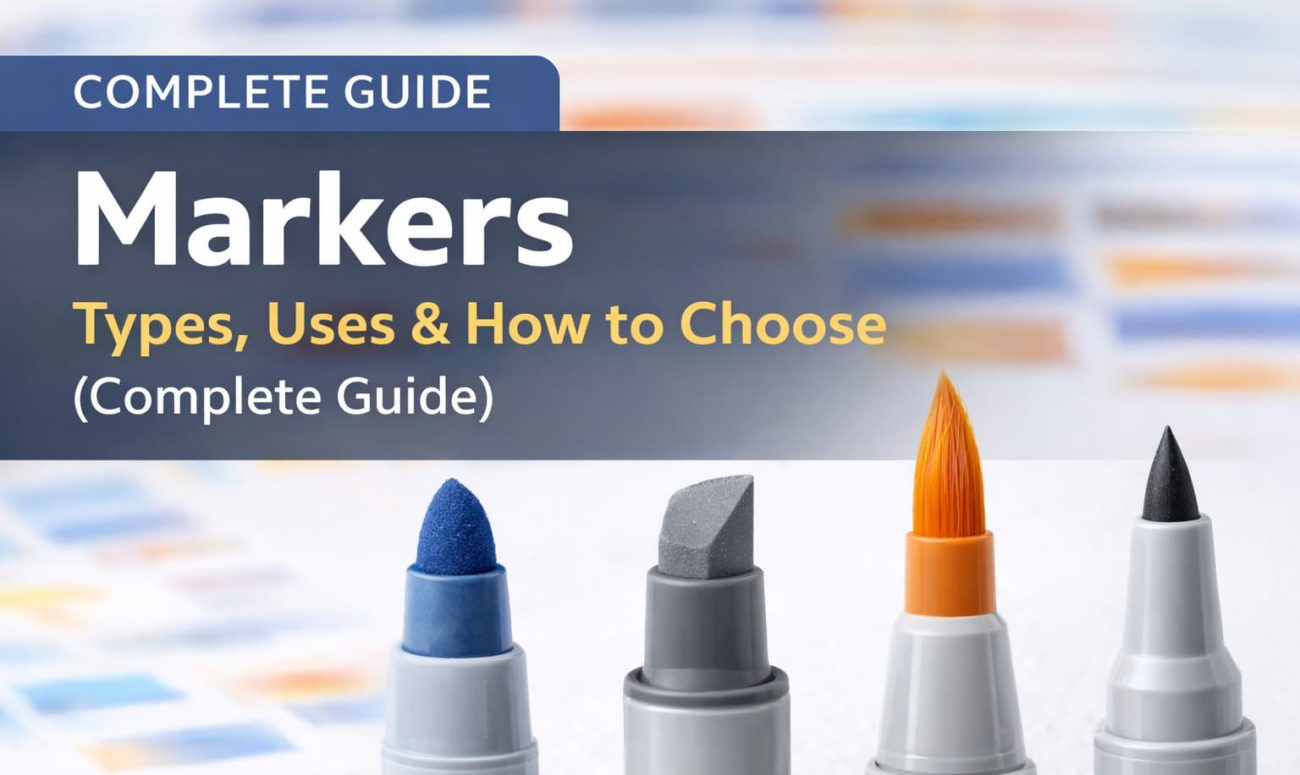
The Ultimate Acrylic Pen Guide: Ink Properties, Nib Types & How to Use Them

Why Acrylic Pens Are Everywhere Right Now

For every beginner asking "which acrylic pen should I buy?" — this is the only guide you need.


Walk into any craft store, art market, or DIY workshop overseas and you'll see them: acrylic pens. They've quietly become one of the most popular tools for scrapbooking, hand-lettering, card-making, rock painting, and wall murals. But here's the problem most beginners run into — acrylic pens look similar to regular watercolor pens and markers on the shelf, so choosing one feels like guesswork. You pick one up, it bleeds through your paper, the color looks washed out, and you wonder what went wrong.

The truth is, acrylic pens are a completely different tool. Once you understand two things — the ink and the nib — choosing the right one becomes easy. That's exactly what this guide covers.

What Makes Acrylic Pen Ink Special

The magic of an acrylic pen lives in its ink. Acrylic ink is pigment-based (not dye-based like most regular pens), and that single difference changes everything.

1. Waterproof & Quick-Drying Regular markers and watercolor pens use water-soluble dye, so they smear the moment they touch water or your sweaty palm. Acrylic ink dries fast and forms a permanent, waterproof layer once set. You can write, wait a few seconds, and paint over it or even wash the surface — the design stays put.

2. High Opacity / Great Coverage Because it's pigment-rich, acrylic ink covers what's underneath. Dark paper, wood, glass, black cardboard — it shows up clearly in bold, true colors. This is why artists use acrylic pens for details on dark or textured surfaces where ordinary pens simply disappear.

3. Minimal Bleed-Through Watercolor pens soak into paper fibers and bleed through the back. Acrylic ink sits on top of the surface instead of sinking in. Even on thinner paper, you get crisp lines with little to no bleed — a huge plus for journaling and mixed-media work.

4. Matte or Glossy Finish Options Depending on the formula, acrylic ink dries to either a smooth matte finish (great for a modern, understated look) or a glossy, polished shine. Having both lets you control the final texture of your piece.

5. Non-Toxic & Eco-Friendly Quality acrylic pens are water-based and non-toxic, which makes them safe for kids' crafts and everyday home use. They clean up with water while still wet, so they're beginner-friendly too.

6. Multi-Surface Versatility This is the big one. Acrylic ink adheres to nearly every surface you can think of: paper, canvas, stone, glass, metal, ceramics, plastic, and wood. One set of pens can handle your journal in the morning, a rock-painting project in the afternoon, and a glass jar decoration by evening. Regular pens simply can't do that.

The short version: if you want colors that stay, cover well, don't bleed, and work on almost anything — that's what separates acrylic ink from ordinary pen ink.

The Three Main Nib Types & When to Use Them

The nib determines how your strokes look. Acrylic pens come in three dominant nib styles, and each has a distinct personality.

1. Brush Nib 

  • Structure: a soft, flexible tip that can be pressed to spread.
  • Stroke: thick-to-thin lines, smooth shading, and elegant tapered strokes — the classic calligraphy and lettering feel.
  • Best for: hand-lettering, titles, decorative flourishes, and blending color gradients.
  • Pros: extremely expressive; line width changes with pressure.
  • Cons: needs a steady hand; less precise for tiny, technical details; wears down faster than hard nibs.

2. Direct-Liquid / Press Nib 

  • Structure: a cartridge-style system that releases ink continuously as you press, giving a steady, wet flow.
  • Stroke: bold, consistent, saturated lines with no need to pump or reload.
  • Best for: filling large areas, bold outlines, poster work, and long writing sessions where you want smooth, even coverage.
  • Pros: high ink capacity, effortless flow, no dry strokes.
  • Cons: flow can be too generous for fine detail work; less controllable than a hard nib.

3. Hard Round Nib  

  • Structure: a firm, durable rounded tip.
  • Stroke: thin, uniform, precise lines that stay the same width no matter the angle.
  • Best for: dotting, details, outlines, borders, and technical or geometric drawing.
  • Pros: maximum precision and control; great for small intricate work; long-lasting tip.
  • Cons: not suitable for expressive calligraphy or broad shading; needs multiple passes to fill large areas.

Quick nib cheat sheet: Need expressive letters? Brush. Need bold, fast filling? Direct-liquid. Need sharp details? Hard round.

How to Choose + Pro Care Tips

Pick by your goal:

  • Lettering & hand-drawn art → go with brush nibs.
  • Bullet journals, doodles & fine details → hard round tips.
  • Posters, murals & quick large fills → direct-liquid press pens.
  • All-round starter → grab a mixed set with all three nib types so you can experiment.

To keep your pens alive longer:

  • Always cap them tightly right after use — acrylic ink dries fast and a left-open pen can clog within minutes.
  • Store them tip-down or horizontally so ink stays at the nib and doesn't dry out.
  • If a nib starts to clog, dab it on a damp paper towel (water cleans acrylic while it's wet) to revive the flow.
  • Shake gently before use if the ink has separated, and test on scrap paper first.
  • Clean nibs after heavy use — pigment residue is the #1 cause of clogging.

Whether you're a beginner building your first set or an artist restocking, our acrylic pen sets cover all three nib types in one kit, with waterproof, non-toxic, multi-surface ink that works on paper, stone, glass, and canvas. Start creating today!